

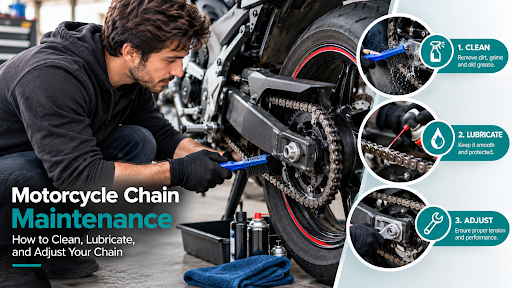
A motorcycle chain plays an essential role in transferring engine power to the rear wheel. Dirt, moisture, insufficient lubrication, and incorrect tension can affect its performance and shorten its lifespan. Regular chain inspections help riders identify wear early and keep the drivetrain in better condition.
Because motorcycle chains operate in exposed conditions, they collect dust, road debris, and moisture during everyday riding. Without routine attention, these contaminants can increase friction and contribute to premature wear.
A consistent maintenance routine involves cleaning the chain, applying suitable lubricant, checking tension, and inspecting the sprockets. Riders who notice unusual noise or excessive looseness can arrange a service appointment before the problem develops further.
Why Motorcycle Chain Maintenance Is Important?
The chain and sprockets work together to transfer power from the engine to the rear wheel. When these components are properly maintained, power delivery remains more predictable, and unnecessary wear can be reduced.
A neglected chain may develop stiff links, corrosion, or uneven wear. Excessive slack can cause rough operation, while excessive tightness can place additional stress on drivetrain components. Both conditions can affect reliability.
Maintenance intervals vary by motorcycle model and riding conditions. Riders should consult the owner’s manual for the recommended inspection schedule, especially after riding through rain, mud, or dusty environments.
How to Clean a Motorcycle Chain?
Before cleaning, park the motorcycle securely on a level surface, switch off the engine, and allow hot components to cool. Follow the owner’s manual for safe wheel positioning and any model-specific precautions.
Use a chain cleaner that is compatible with the chain’s design and seals. Apply it according to the product instructions, then gently remove accumulated dirt with a suitable chain brush. Avoid harsh chemicals that could damage seals or other components.
Wipe away the loosened dirt with a clean cloth and allow the chain to dry. Never clean a chain while the engine is running, and keep your hands, clothing, and tools away from moving parts.
During cleaning, inspect the chain and sprockets for corrosion, damaged rollers, stiff links, and unusual wear. Relevant parts diagrams can help identify drivetrain components when checking which parts belong to a particular motorcycle model.
Applying Motorcycle Chain Lubricant
Once the chain is clean and dry, apply a lubricant designed for motorcycle chains. Follow the manufacturer’s instructions and use an amount appropriate for the chain type.
Distribute the lubricant evenly across the recommended surfaces and allow it to settle for the specified period before riding. Applying excessive lubricant can attract dirt, so wipe away surplus product where appropriate.
The right lubricant depends on the chain design and the conditions in which the motorcycle is ridden. A motorcycle used frequently in wet weather may require more frequent attention than one ridden occasionally in dry conditions.
Lubrication cannot repair a chain that has damaged rollers, severely corroded links, or excessive wear. Such problems require further inspection and potentially replacement.
Checking Chain Tension and Alignment
Correct chain tension is essential for reliable drivetrain operation. A chain that is too loose may move excessively, produce noise, or risk coming off the sprockets. A chain that is too tight can increase stress on the chain, sprockets, bearings, and related components.
Check chain slack at the point specified in the owner’s manual. Measurement methods and acceptable ranges differ between motorcycles, so avoid using a universal measurement.
If adjustment is required, follow the manufacturer’s procedure for the chain adjusters and rear axle. Correct wheel alignment is important, and fasteners must be tightened to the specified torque. If you are unfamiliar with the process, ask a qualified technician to perform the adjustment.
Signs Your Motorcycle Chain Needs Replacement
Several warning signs indicate that a chain may need professional assessment. These include stiff links, significant rust, damaged rollers, unusual noises, tight spots, and repeated changes in tension.
The sprockets also require inspection. Teeth that appear hooked, pointed, or unevenly worn can indicate that the drive system needs attention. Replacing only one worn component may not be appropriate when the chain and sprockets have deteriorated together.
Follow the manufacturer’s wear limits and replacement recommendations. Never continue riding if the chain appears damaged or is binding, jumping, or showing signs of possible failure.
Frequently Asked Questions
1. How often should I clean my motorcycle chain?
Follow the maintenance schedule in your owner’s manual. Riding through rain, mud, or dusty conditions may require more frequent cleaning.
2. How often should I lubricate the chain?
Lubrication frequency depends on the motorcycle, chain type, lubricant, and riding conditions. Follow the manufacturer’s recommendations and inspect the chain regularly.
3. Can I use ordinary engine oil on a motorcycle chain?
Use a lubricant specifically recommended for your chain type. Ordinary engine oil may not provide the properties required for reliable chain lubrication.
4. How can I tell if my chain is too loose?
Measure its slack using the procedure and specifications in the owner’s manual. Excessive movement, unusual noise, or repeated adjustment needs may indicate a problem.
5. Should the chain and sprockets be replaced together?
When both components show significant wear, replacing them as a set is commonly recommended. Follow the motorcycle manufacturer’s guidance and have the drivetrain inspected when necessary.
Conclusion
Regular cleaning, appropriate lubrication, correct tension, and timely inspections help protect a motorcycle’s drivetrain and support consistent performance. Following model-specific maintenance recommendations also helps riders identify worn components before they become a greater concern. When replacement components are needed, the parts department can help identify suitable options for the motorcycle.
Read More: What Makes a Motorcycle Comfortable for Long-Distance Riding
